Birth preparation one to one
Pelvic floor course for birth preparation 1:1 Entirely at your pace
The same course, just for you: four live sessions from week 30 of pregnancy, at times we agree together. In German or English.
About the course
For birth, your pelvic floor does not need maximum strength. It needs to be able to let go. That is what this course is built around, which is why relaxing gets just as much room here as strengthening.
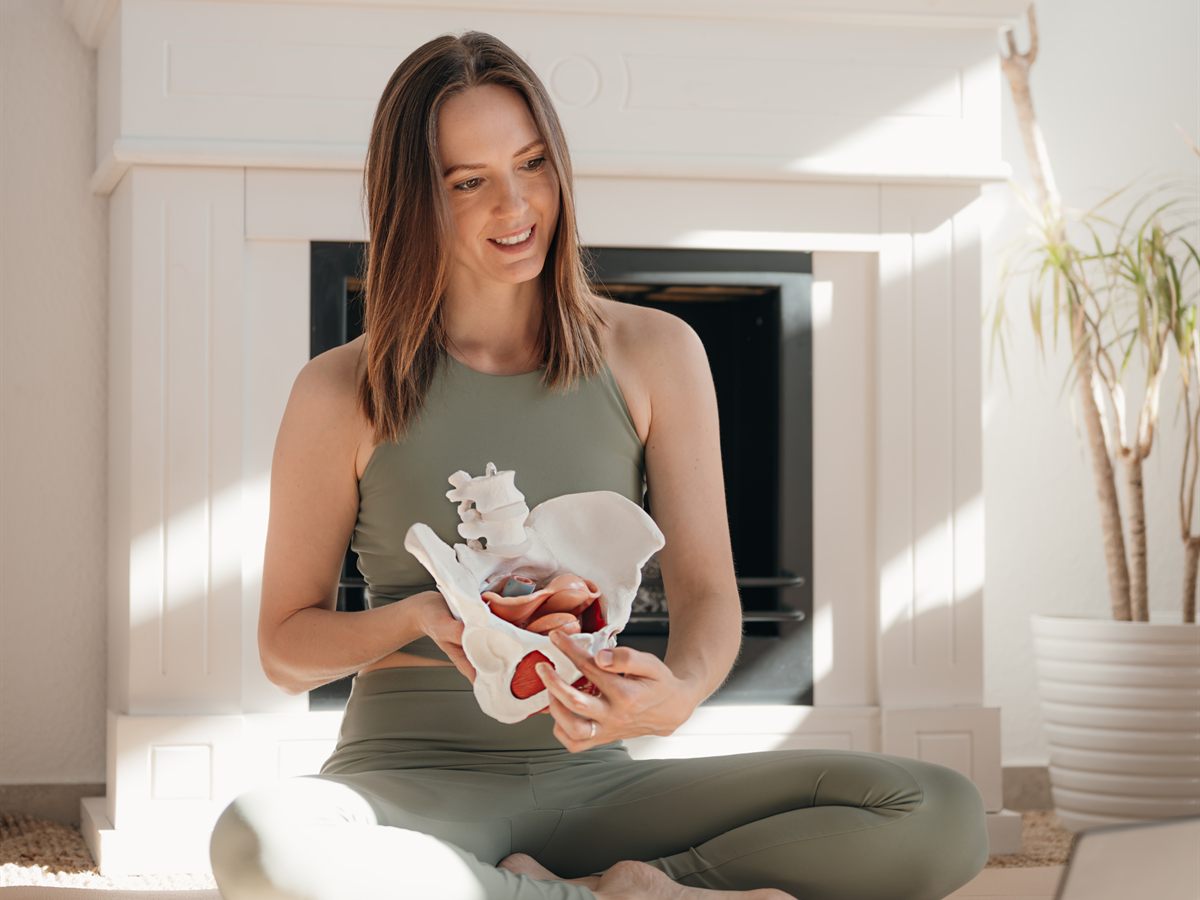
Over four sessions you really get to know your pelvic floor: where it is, how it responds to your breath and how to relax it on purpose. You take away breathing techniques to carry you through contractions, positions that open your pelvis, and everyday habits that take the load off your pelvic floor.
One to one, it is just the two of us. We go exactly at your pace, and there is room for whatever is on your mind, including questions you would rather not ask in a group.
The course does not replace your midwife's antenatal class. It adds what usually only gets a passing mention there: your pelvic floor.
Virginia, BeBo® certified pelvic floor trainer
Course plan
The four sessions
The course is based on the BeBo® concept, a Swiss standard for pelvic floor training in which I am certified. Each session lasts 60 minutes and builds on the one before. Afterwards you get a short summary of the exercises as a PDF, to keep practising at home.
Session 1
Arriving in the pelvis
Where your pelvic floor is, how it works together with your breath, and why birth calls for a flexible muscle rather than the firmest possible one.
Session 2
Learning to let go
Making relaxation tangible from the outside in: through your hands, feet, jaw and breath down to your pelvic floor. For me, the most important session of the course.
Session 3
Breathing and sounding for birth
Your breath as a tool: breathing through contractions, truly letting go in the pauses, and sounds that let your pelvic floor soften.
Session 4
Opening, pushing, trusting
Positions that open your pelvis, preparing calmly for pushing, and a look ahead at the first weeks after birth.
Course details
What you take away, and what you need
What do you take away?
- You learn where your pelvic floor is and how to feel it consciously
- You practise letting it go, not just tensing it, because that is what it mainly needs to do during birth
- Breathing techniques that can carry you through contractions
- Positions that give your pelvis room
- Everyday habits that take the load off your pelvic floor
- Exercises for home that fit into your day
- Undivided attention and room for your very personal questions
What do you need?
- From week 30 of an uncomplicated pregnancy, no previous experience needed
- A chair with a firm seat
- A mat or a rug
- Two or three cushions, a rolled-up blanket and a towel
- Comfortable clothes and warm non-slip socks
- Optionally an exercise ball, every exercise also works without
- A laptop, tablet or smartphone with a camera and a stable internet connection
- A quick go-ahead from your midwife or doctor beforehand
You can take part if …
- you are at least 30 weeks pregnant,
- your pregnancy is uncomplicated
- and your midwife or doctor has given the go-ahead.
The course is not the right fit just now if …
- you have preterm contractions or an increased risk of preterm birth
- you have any bleeding
- you have a known weak cervix or a cerclage
- your placenta is low-lying (placenta praevia)
- your waters have broken early or you are leaking amniotic fluid
- you have pregnancy-induced high blood pressure or pre-eclampsia
- your doctor has advised you to rest or stay in bed
If in doubt, ask your midwife or doctor. And if anything changes during the course, please let me know before the next session.
Sign up
Your one-to-one course
We agree the dates together, with room for your specific concern
- 4 × 60 min per session, Live online
- One to one
- First course: Times by arrangement
- In German or English
for the whole course
Would you rather share it with other pregnant women? To the group course in the studio
Frequently asked questions
Is this medical treatment? Do I need a diagnosis first?
No. The course is prevention and training, not medical treatment, and you do not need a diagnosis to join. Please still speak to your doctor or midwife beforehand, especially if you have acute symptoms, pain or bleeding.
Do I need prior experience?
No. The course is built for complete beginners. We start with sensing rather than with complicated exercises, so no prior knowledge or sporting background is needed.
How far into pregnancy can I join?
From week 30, as long as your pregnancy is uncomplicated. Please speak to your midwife or doctor first. If you have, for example, preterm contractions, bleeding, a weak cervix or a low-lying placenta, the course is not the right fit for you just now. If you are unsure whether the group or the 1:1 suits you better, just ask me in the intro call.
Does the course replace my midwife's antenatal class?
No, it complements it. The midwife's class covers birth as a whole; here we spend four sessions on your pelvic floor, which usually only gets a passing mention there.
Does health insurance pay for the course?
No. The course is self-pay and is not certified under § 20 SGB V, so statutory health insurers do not subsidise it.
Can I cancel or reschedule?
Yes. Up to 14 days before the first session you can cancel free of charge; after that the scale in the terms and conditions applies. Individual sessions can be moved free of charge up to 24 hours beforehand.
Can the one-to-one be in English?
Yes. I offer the one-to-one in German and in English. Just tell me which language you prefer.
This page is general information and does not replace a medical or physiotherapeutic diagnosis. If you have acute pain, bleeding or severe symptoms, please see a healthcare professional.